


03 Jul BECOMING EXTRAORDINARY WITH MATT JOHNS MBE
Leadership, learning and unlocking potential
Matt Johns MBE never expected to build a career in leadership development.
After university, he began working as a journalist, covering local stories across South Wales before an opportunity to report on the 2002 World Cup took him to South Korea and Japan. What was meant to be a short trip became nearly two years abroad – an experience that ultimately led him in an entirely different direction.
Following a career as an Army officer, Matt went on to found Fieri, where he has spent more than a decade helping leaders and teams perform at their best. Throughout that journey, one belief has remained constant: extraordinary performance is rarely about individual talent alone. It’s built through connection, continual learning and a commitment to helping others succeed.
In this conversation, Matt reflects on the experiences that shaped his leadership philosophy, why followership matters as much as leadership, and what becoming extraordinary means in practice.
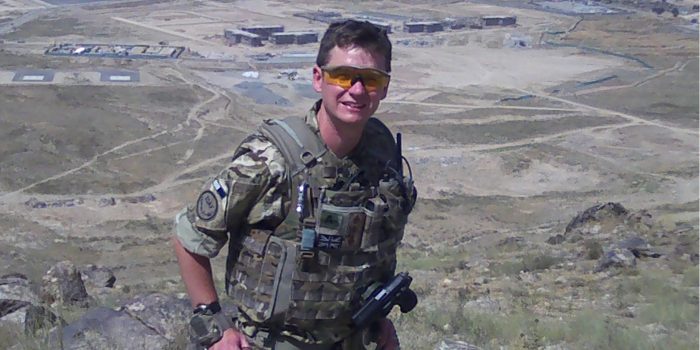
Looking back, what experiences have shaped who you are as a leader today?
We’re all shaped by the people and environments around us. For me, family played a big role. Both of my parents worked in the public sector and there was always a strong sense of service and helping others. Looking back, that had a bigger influence on me than I probably realised at the time.
Professionally, one of the most formative experiences was attending the Royal Military Academy Sandhurst. It was a world I knew very little about, but it taught me an enormous amount about leadership, teamwork and myself.
You’re placed under pressure for a sustained period of time, surrounded by highly driven people and exceptional instructors. You learn quickly what motivates people, what builds trust and what makes teams perform. Many of the lessons I apply today can be traced back to that experience.
People often have strong assumptions about military leadership. What’s the biggest misconception?
Most people’s reference point is what they’ve seen in films or television, and the reality is very different.
At its core, military leadership is about many of the same things as leadership in any organisation. You need to build trust, create cohesion, help people perform at their best and achieve something collectively.
The difference is that, at times, you’re asking people to do extraordinary things in very challenging circumstances. That means the quality of leadership matters enormously.
What has consistently stood out to me is that people are rarely motivated by abstract goals. They’re motivated by the people around them. They look left and right and focus on the team they’re part of. They don’t want to let each other down.
That principle applies just as much in organisations as it does in the military. Great leaders create environments where people feel valued, supported and connected to something bigger than themselves.
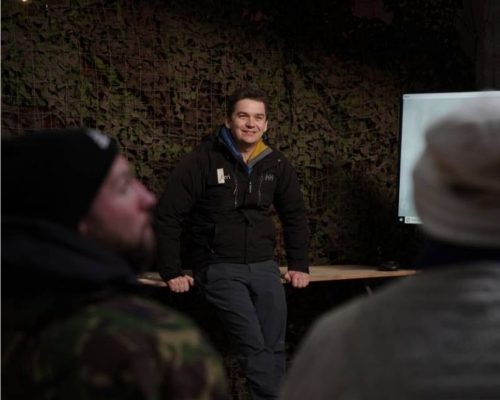
You’ve spoken about leadership as an ecosystem between leaders and followers. What do you mean by that?
We spend a huge amount of time talking about leaders and not nearly enough time talking about followers.
The reality is that leadership only exists because other people choose to follow. The relationship between the leader and the team is what determines whether a group succeeds or struggles.
At Sandhurst, one of the early lessons was that leadership is both a privilege and a responsibility. People quickly realise that being in charge carries real weight. When you’ve experienced that yourself, you tend to develop greater empathy for those in leadership positions.
That’s why followership matters. Good followers understand how to support, challenge and contribute. They recognise that leadership is a function within the team, not a status above it.
Equally, leaders have a responsibility to put the team first. We spoke a lot about servant leadership during training. The role of the leader is to create the conditions for others to succeed, not to place themselves at the centre of the story.
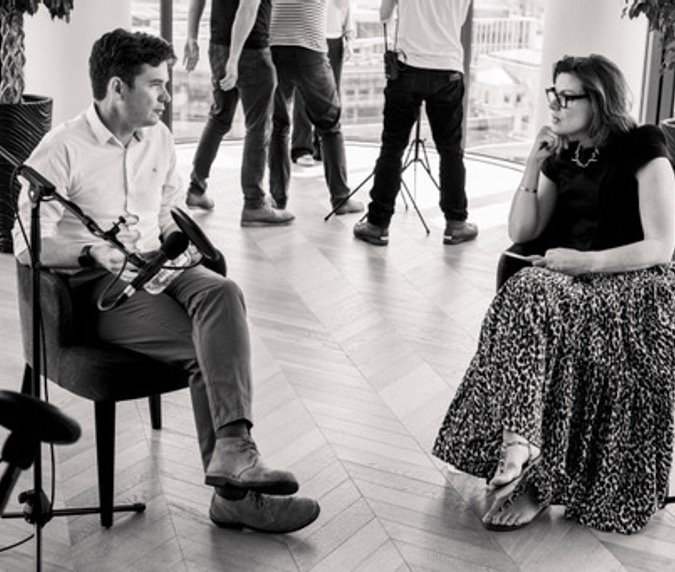
What’s the difference between a group of talented individuals and a genuinely high-performing team?
Connection.
I’ve seen teams made up of incredibly capable and accomplished individuals who never quite become a high-performing team because they haven’t built strong enough connections with one another.
Often that’s because they’re under pressure. The task is demanding, deadlines are tight and everyone focuses on delivery. The challenge is that without connection, performance eventually suffers.
When people genuinely know each other, trust each other and understand what matters to one another, collaboration becomes easier. Difficult conversations become easier. Supporting each other becomes easier.
In the military and in sport, teams often have time to train together and build those relationships before performance is required. In many organisations, people are expected to perform immediately while simultaneously building the team.
That’s why connection can’t be left to chance. In my experience, it’s the foundation on which sustained performance is built.
You’ve returned to education several times throughout your career. Why has learning remained so important?
Because learning about leadership and management is open-ended. There is always more to learn.
One of the things I’ve noticed over the years is that leaders tend to fall into two camps. Some remain curious and open to learning. Others become protective of what they already know and feel they need to have all the answers.
The best leaders I’ve worked with never stop learning and are not afraid to show some vulnerability or gaps in knowledge.
The challenge is that leadership is constantly changing. The environment changes, the people change, the technology changes and the expectations placed on leaders change. What worked in one context may not work in another.
Leadership also draws on an incredibly broad range of disciplines – communication, psychology, management, behavioural science and much more.
The moment you think you’ve mastered it is probably the moment you stop growing.
General Sir Mark Carleton-Smith spoke a few years back about having to relearn how to lead many times in his career; and that the approach that got him to one particular level isn’t necessarily the approach that will lead to success at the next level. I see the evolving needs and expectations placed on leaders time and again.
What do the best leaders you’ve worked with have in common?
Empathy.
The strongest leaders I’ve worked with are able to make difficult decisions when they need to, but they never lose sight of the impact those decisions have on people. The term ‘Ruthlessly Caring’1 sums up the need for leaders to be able to exercise both empathy and the ability to make tough decisions.
Good leaders understand what situations feel like from someone else’s perspective. They involve people where they can, communicate clearly and work hard to help others understand why decisions are being made.
Empathy on its own isn’t enough, of course. It needs to be combined with strong communication, consistency, sound judgement and the ability to solve problems under pressure.
But empathy is often the starting point.
It’s what allows leaders to connect with people, understand what they need and create environments where they can thrive.
When you hear the phrase “becoming extraordinary”, what does that mean to you?
I think people often underestimate what they’re capable of.
Sometimes all it takes is a conversation, a programme or a new experience to help someone see more potential in themselves than they did before. I’ve seen people transform their thinking remarkably quickly when they’re given the space, support or challenge they need.
For me, becoming extraordinary isn’t about being the best or comparing yourself to other people.
It’s about pushing your own boundaries.
It’s about continuing to learn, continuing to grow and becoming a better version of yourself than you were yesterday.
Extraordinary looks different for everyone, but the principle is the same. It’s the willingness to keep moving forward and realise more of your potential.
Matt Johns MBE
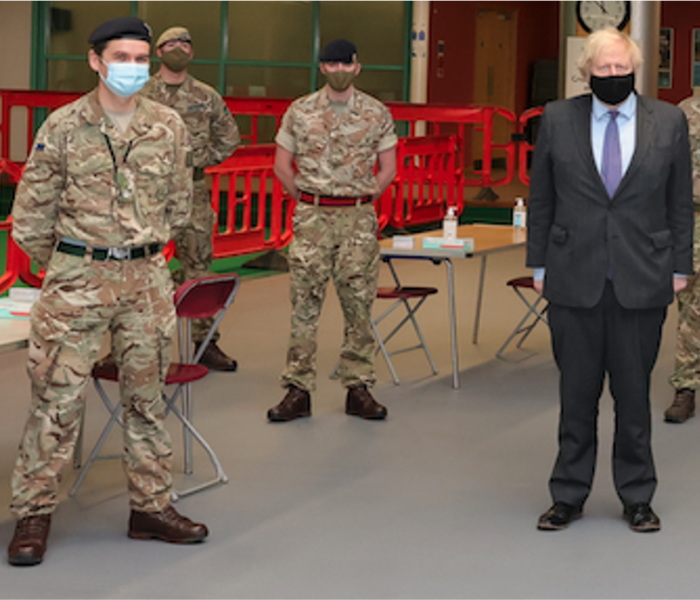
During the COVID-19 pandemic, Matt served as the military lead adviser to the Scottish Government for the vaccine rollout, helping coordinate military support and the deployment of hundreds of military vaccinators across the country. Alongside this, he developed a leadership programme for aspiring Army Officers. He was awarded an MBE in 2022 in recognition of his contribution.